Periodic Adjustments in Giveaway Rules and Their Influence on Sustained Participation in Multi-Platform Contest Networks
Parker Flores · Oct 17, 2026
Periodic Adjustments in Giveaway Rules and Their Influence on Sustained Participation in Multi-Platform Contest Networks
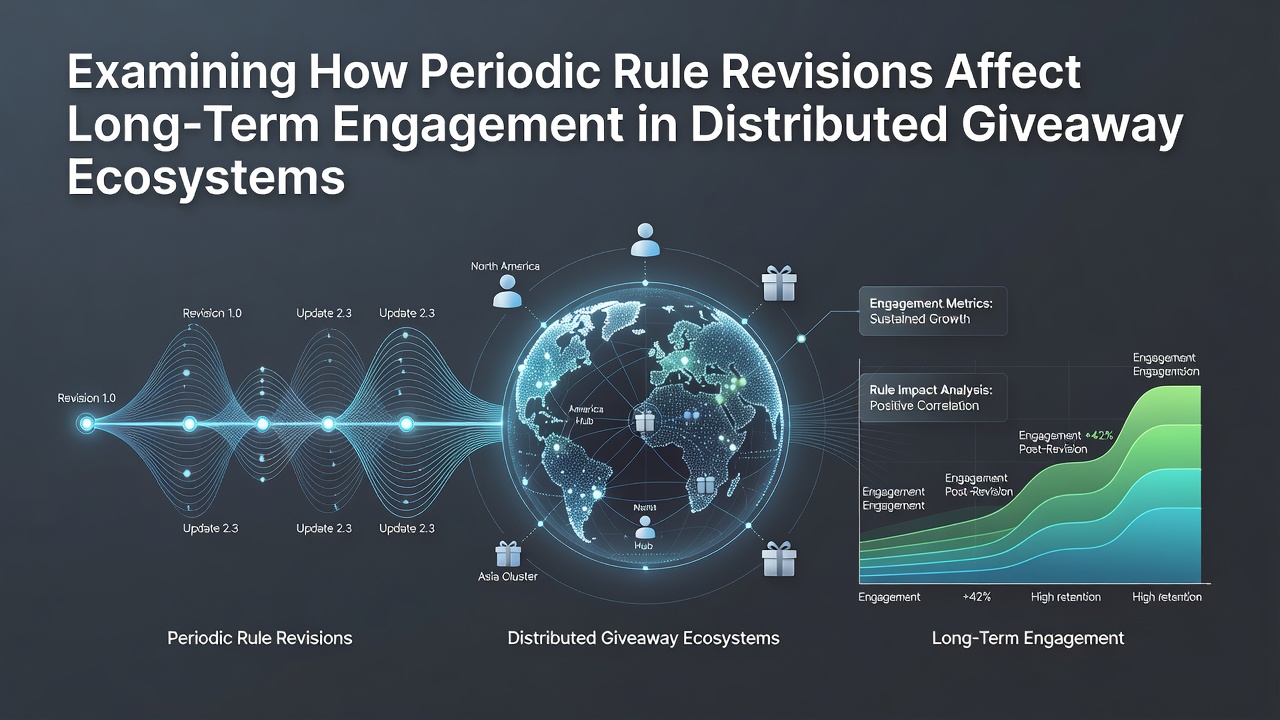
Distributed giveaway ecosystems consist of interconnected online platforms that host recurring sweepstakes, prize draws, and promotional contests with shared participant pools and synchronized entry mechanisms. These systems operate across numerous websites and applications where periodic rule revisions occur to address regulatory shifts, platform policy updates, and operational refinements. Data from industry tracking services indicate that such revisions take place on average every six to eighteen months in major networks, affecting eligibility criteria, entry frequency limits, and verification procedures.
Mechanics of Rule Revisions Across Networks
Rule changes typically emerge from compliance requirements set by bodies like the Federal Trade Commission in the United States or the Australian Competition and Consumer Commission, which enforce standards on disclosure and fairness. Platforms implement these adjustments by updating terms that govern age restrictions, geographic boundaries, and data submission protocols. Observers note that revisions often cluster around specific periods, such as October 2026 when several major operators plan alignments with upcoming consumer protection guidelines. Participants encounter these modifications through revised entry forms, updated terms of service pages, and automated notifications that require acknowledgment before further submissions.
Research from consumer behavior studies shows that revisions frequently target entry methods, shifting from simple form completions to multi-step verifications involving email confirmations or social media integrations. This evolution stems from efforts to reduce fraudulent entries, with figures from platform reports revealing reductions in duplicate submissions by up to 25 percent following such implementations. Yet the process creates temporary barriers as users adapt their routines to new interfaces and documentation demands.
Effects on Participant Retention Over Extended Periods
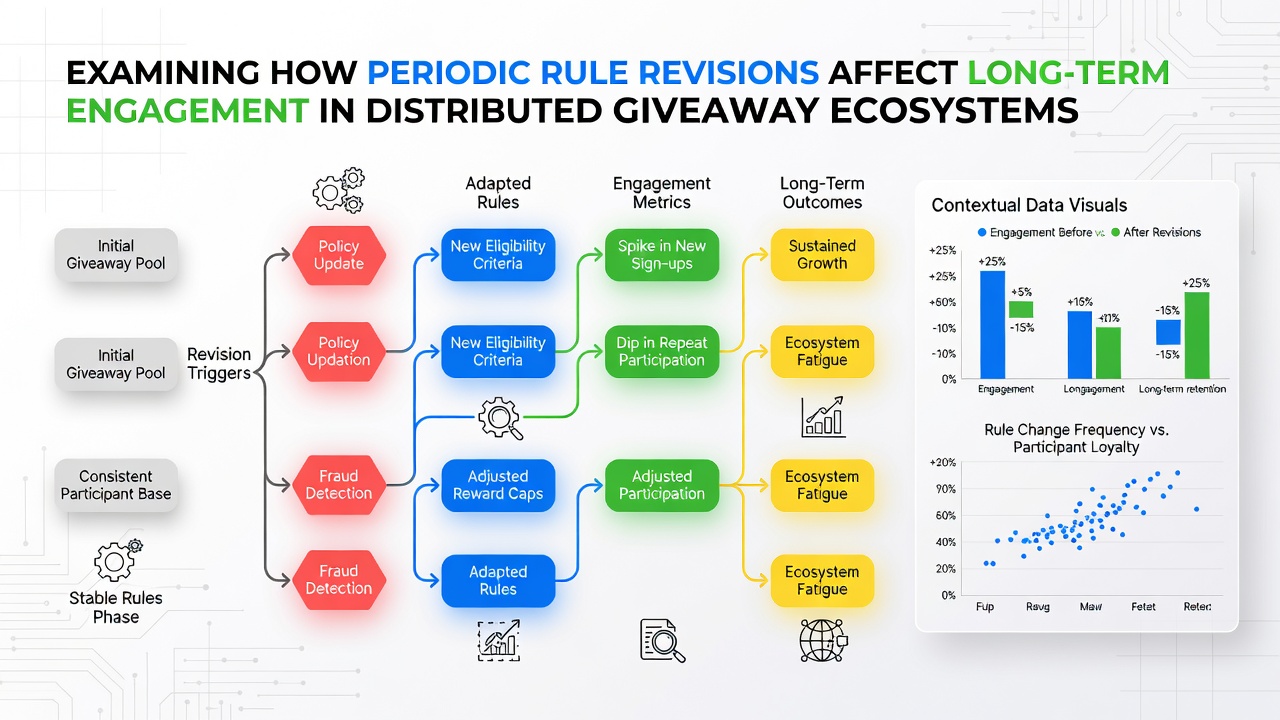
Long-term engagement metrics reveal distinct patterns following rule revisions. Analyses of participation logs from distributed networks demonstrate that initial drops in active users range between 15 and 30 percent within the first month after a major update. Those who maintain involvement often adjust by incorporating new tools such as reminder applications or profile management systems that track evolving requirements. Evidence from longitudinal tracking indicates that sustained access correlates with regular profile updates, where individuals who refresh personal data quarterly exhibit retention rates 40 percent higher than those who do not.
What's interesting emerges when examining cross-border elements, since eligibility adjustments can exclude entire regions overnight and force participants to recalibrate their involvement strategies. Studies on global contest participation highlight how timezone considerations intersect with these changes, leading to uneven access patterns where users in certain zones experience delayed notifications that compound the effects of rule shifts.
Adaptation Patterns Among Regular Participants
Individuals who navigate these ecosystems successfully often develop systematic approaches to monitoring announcements. One documented case from platform analytics involves users who synchronize their calendars with announcement cycles, resulting in higher completion rates for qualifying actions across multiple simultaneous promotions. Data indicates that those maintaining consistent device compatibility checks avoid disruptions that arise when platforms alter supported browsers or mobile requirements during revisions.
Privacy protocol modifications represent another frequent area of change, with updated consent forms requiring fresh approvals that can interrupt automated entry sequences. Researchers have tracked how these interruptions influence overall activity levels, finding that networks providing clear transition periods see faster recovery in participation volumes compared to abrupt implementations. External reports from organizations such as the Federal Trade Commission underscore the role of transparent communication in preserving user trust during these transitions.
Broader Ecosystem Responses and Data Trends
Platform operators respond to engagement fluctuations by refining notification cadences and introducing support resources that explain revised rules in accessible formats. Metrics collected across various networks show that coordinated updates across related sites reduce confusion and support steadier participation curves. A study referenced in industry publications from the Competition Bureau of Canada points to correlations between profile maintenance habits and continued eligibility, with regular data validation serving as a key factor in avoiding disqualification during extended campaigns.
Referral mechanisms sometimes undergo parallel revisions, altering how multipliers apply to recurring draws and thereby influencing social sharing behaviors among participants. Observers tracking these dynamics note that networks incorporating feedback loops from users experience fewer prolonged dips in activity following changes.
Conclusion
Periodic rule revisions shape the operational landscape of distributed giveaway ecosystems through targeted modifications to eligibility, verification, and procedural elements. Participation data across multiple platforms consistently illustrate both short-term disruptions and longer-term adaptation pathways that depend on user strategies and platform support structures. Continued monitoring of these patterns provides insight into how such systems maintain functionality amid evolving requirements.